 | VS. |  |
Showing posts with label Algorithms. Show all posts
Showing posts with label Algorithms. Show all posts
Tech Book Face Off: Facts and Fallacies of Software Engineering Vs. Programming Pearls 2
Since I've been hitting the tech books pretty hard for a while now, for this Tech Book Face Off I wanted to take a bit of a breather and do a couple of relatively easy reads. These books have been on my to-read list for some time, so I decided to finally check them out. The first one, Facts and Fallacies of Software Engineering by Robert L. Glass is a book in a similar vein as The Pragmatic Programmer in that it relates various tidbits of advice on the craft of software engineering. As for Programming Pearls 2 by Jon Bentley, this book surprised me. I thought it would be somewhat similar to Facts and Fallacies, just more directly related to instructive programming examples than to the software engineering field at large, but it turned out to be quite a bit different, as we'll see in this review.
Tech Book Face Off: Data Smart Vs. Python Machine Learning
After reading a few books on data science and a little bit about machine learning, I felt it was time to round out my studies in these subjects with a couple more books. I was hoping to get some more exposure to implementing different machine learning algorithms as well as diving deeper into how to effectively use the different Python tools for machine learning, and these two books seemed to fit the bill. The first book with the upside-down face, Data Smart: Using Data Science to Transform Data Into Insight by John W. Foreman, looked like it would fulfill the former goal and do it all in Excel, oddly enough. The second book with the right side-up face, Python Machine Learning: Machine Learning and Deep Learning with Python, scikit-learn, and TensorFlow by Sebastian Raschka and Vahid Mirjalili, promised to address the second goal. Let's see how these two books complement each other and move the reader toward a better understanding of machine learning.
 | VS. | 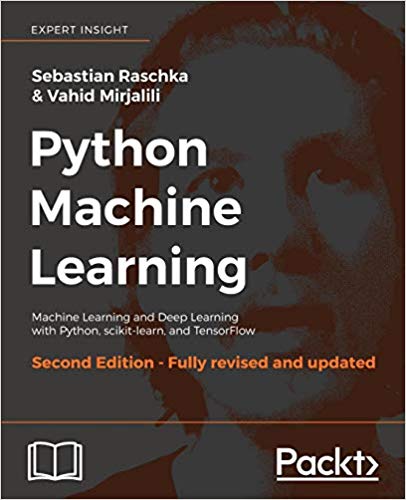 |
Tech Book Face Off: Python for Data Analysis Vs. Python Data Science Handbook
I'm starting to dabble in machine learning. (You know it's all the rage now.) As with anything new, I find it most effective to pick out a couple of books on the subject and start learning the landscape and the details straight away. Online resources are good for an introduction, or to find answers to specific questions on how to get a particular task done, but they don't hold a candle to the depth and focus that you can find from reading about a subject in a well-written book. Since I'd already had some general exposure to machine learning in college, I wanted to work through a couple of books that focused on how to do data analysis and machine learning in a practical sense with a real language and modern tools. Python with Pandas and Scikit-Learn has a huge community and plenty of active development right now, so that's the route I went with for this pair of books. I selected Python for Data Analysis: Data Wrangling with Pandas, NumPy, and IPython by Wes McKinney to get the details of using the Pandas data analysis package from the author of the package himself. Then I chose Python Data Science Handbook: Essential Tools for Working with Data by Jake VanderPlas to get more coverage of Pandas from another perspective and expand into some of the Scikit-Learn tools available for machine learning. Let's see how these two books stack up for learning to make sense of large amounts of data.
 | VS. | 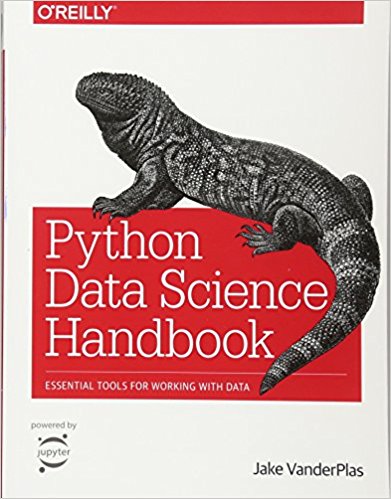 |
Tech Book Face Off: Introduction to Algorithms Vs. Linear Algebra and Differential Equations
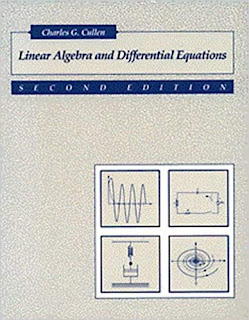
This Tech Book Face Off has been a significant undertaking, more so than I originally imagined. It took over ten months to get through these two books, slowly chipping away at them in my free time during the evenings until I had finally read all of the material and worked all (well, nearly all) of the problems. As a result it's been nearly a year since my last book review, and working through these books was quite the experience. The goal at the outset of this project was to revisit a couple of textbooks from college, things that I felt I should brush up on. I wanted to see how much I retained of these subjects and how much I had forgotten that may still be useful. I chose Linear Algebra and Differential Equations by Charles G. Cullen because I remember having breezed through this subject in college without giving it my full attention. It was easy at the time, and I coasted through the course without, I thought, giving it the effort it deserved. Then I picked up Introduction to Algorithms by the famed group of professors known throughout the programming world as CLRS. I love algorithms, and I have fond memories of this course and working through this book, so I wanted to go through it again in its entirety, picking up the subjects that we had skipped in the course as well. What follows is the perspective of one programmer rereading a couple of old textbooks fifteen or so years later.
 | VS. |  |
Explore Simple Game Algorithms with Color Walk: Part 12
We've now been exploring and discussing game algorithms using the simple game Color Walk for months over the course of 11 posts. We started out extremely simple with random and round-robin algorithms, advanced to some obvious greedy algorithms, and wound up discussing a number of graph algorithms. We've discovered a ton of stuff along the way, so it would be nice to step back and review the ground we've covered to see the big picture in all of the experimentation and details of the various algorithms we found along the way.
Explore Simple Game Algorithms with Color Walk: Part 11
In this installment of exploring game algorithms using the simple game Color Walk, we're going to do something a little different. Last time we explored a number of variations and hybrids of Dijkstra's algorithm—the classic, efficient graph algorithm for finding shortest paths—and found that pairing it with a pre-run of Greedy Look-Ahead (GLA) performed better than any other algorithm we've seen so far. This time we're not going to explore any new algorithms. Instead, we're going to look into what makes Dijkstra's algorithm tick: the priority queue. Save for this variant of a standard queue, Dijkstra's algorithm is conceptually the same as Breadth-First Search (BFS), so we want to see what makes this priority queue so special and how we can implement one efficiently with a binary heap.
Explore Simple Game Algorithms with Color Walk: Part 10
We're back for another round of exploring game algorithms using the simple game Color Walk. We finally reached the point of evaluating Dijkstra's algorithm—the classic, efficient graph algorithm for finding shortest paths—in the last post. It performed pretty well against the top dogs: Greedy Look-Ahead (GLA) and the GLA-BFS hybrid, especially when it came to consistently finding the best moves. However, it failed to find the best moves when a board could be solved in under 29 moves, so we're going to see if we can squeeze out any more performance by modifying Dijkstra's algorithm further. To do that, we're going to try combining Dijkstra's algorithm with GLA, running Dijkstra's algorithm in more than one pass, and changing the heuristic we use to guide the search.
Explore Simple Game Algorithms with Color Walk: Part 9
Welcome back for more exploration of game algorithms using the simple game Color Walk. In the last post we covered the other fundamental graph search algorithm, depth-first search (DFS), the counterpart to the previously discussed breadth-first search (BFS). These graph algorithms do a full search of the graph of a color walk game, the full set of board positions resulting from each move at each point in the game. We found that running either of these algorithms to completion is extremely prohibitive due to the graph size being exponential in the number of moves. In order to deal with that exponential growth, we need to look at other graph algorithms, and we have quite a few to choose from. We'll explore some categories of graph algorithms and look at one in more detail, Dijkstra's algorithm.
Explore Simple Game Algorithms with Color Walk: Part 8
We're continuing this ongoing saga of different game algorithms using the simple game Color Walk. In the last post we started exploring the fundamental graph search algorithms with breadth-first search (BFS), because after all, the full set of move choices and resulting board positions of any game can be arranged as a graph. After looking at BFS and finding that we can nominally improve the search for shortest number of moves, on average, it's time we look at the close sibling of BFS: depth-first search (DFS). We'll quickly run into performance issues just like we did for BFS, but let's see if we can come up with a reasonable way to limit DFS so that it can be a useful algorithm.
Explore Simple Game Algorithms with Color Walk: Part 7
We're continuing to explore different game algorithms using the simple game Color Walk. In the last post we took a deep dive into other heuristics that could be used instead of the obvious maximize-the-number-of-blocks-removed approach and found that the obvious choice is actually hard to beat. After looking at various heuristics, it's time we fill in some gaps in our exploration of algorithms by looking at a couple of fundamental graph algorithms: breadth-first search (BFS) and depth-first search (DFS). These algorithms are the two basic ways to search for something in a graph of nodes (or vertices) connected by edges, and a graph is exactly what we have when we draw out all possible move choices with each node representing a move and edges connecting sequential moves. We'll focus on BFS for this post.
Explore Simple Game Algorithms with Color Walk: Part 6
What's next with exploring different game algorithms using the simple game Color Walk? We've come a long way so far with building out the game's interface to support looking at different algorithms, looking at trivial round-robin and random algorithms, and designing a greedy algorithm that picked each move based on the most blocks removed. The last post showed how far we could push the greedy algorithm to look ahead and try to pick a better move that would result in more blocks removed up to five moves ahead, but even after improving the data structure for the board, we hit diminishing returns in looking more moves ahead. It's time to expand our search for algorithms by looking at other heuristics we can use to pick the best move. The greedy algorithm used a heuristic of "the most blocks removed" for any given move, but there are others that we can use.
Explore Simple Game Algorithms with Color Walk: Part 5
We're continuing to look at different game algorithms using the simple game Color Walk as a sandbox for exploration and discovery. The last post covered our first foray into a non-trivial algorithm, namely the greedy algorithm. We found that using the strategy of grabbing the most blocks from the board on each move was a reasonable thing to try, and it outperformed all the previous trivial algorithms. Then we extended the greedy algorithm to look ahead one move and found that it performed even better. Now we're going to extend the greedy algorithm to look ahead arbitrarily far and see how far we can actually look before the run time of the algorithm becomes prohibitive. In this process we should be able to find a way to improve the current data structure of the board to make searching more efficient and allow the algorithm to search more moves ahead as a result.
Explore Simple Game Algorithms with Color Walk: Part 4
In this series we are taking a look at different game algorithms using the simple game Color Walk as a sandbox for exploration and discovery. The last post showed how to add multiple algorithms and select between them, as well as exploring a random choice algorithm and an enhanced way to skip useless choices for both round-robin and random choice. This post will get into our first non-trivial algorithm, the greedy algorithm. Greedy algorithms don't care too much about the future. They will look at the choices immediately in front of them and try to pick the choice that will get them the most stuff right away. That's why they're called greedy, you see? In this case, the greedy algorithm will pick the color that will remove the most blocks on the next turn. Let's see how it stacks up to the trivial algorithms.
Explore Simple Game Algorithms with Color Walk: Part 3
In this series we are taking a look at different game algorithms using the simple game Color Walk as a sandbox for exploration and discovery. The last post showed how to implement one of the simplest algorithms I could think of, round-robin, and how to develop some tooling around the game so that we can quickly run through multiple iterations in a batch mode and see statistics on the run. This post will start exploring some more algorithms, and we'll start needing to think about how to improve the algorithms so they aren't so naive.
Explore Simple Game Algorithms with Color Walk: Part 2
In this series we are taking a look at different game algorithms using the simple game Color Walk as a sandbox for exploration and discovery. The last post was an introduction that described what Color Walk is, explained how to get it running on your own setup, and presented some brainstorming of possible algorithms to explore. This post will start digging into the simplest of those algorithms: round-robin, but first, we need to build up some tooling around the Color Walk JavaScript code to make it easier to test out our algorithms and benchmark their performance. We'll use the round-robin algorithm as a vehicle to help develop this tooling, so we have something to play with while getting the benchmark tooling up and running.
Explore Simple Game Algorithms with Color Walk: Part 1
A few years ago, Jennifer Dewalt did a project where she created 180 websites in 180 days, one every day for half a year, to learn how to program. These "websites" were actually web pages within one website, but the plan and the execution were still quite amazing. I watched on and off as she created page after page, learning all about web development in the process. One page in particular caught my interest: the simple game called Color Walk.
In this game there's a 20x30 grid of colored blocks in five different colors. The top left block is blank, and there are five colored buttons to choose from. Click a button, and the blank space will expand by removing the adjacent colored blocks corresponding to the button clicked. The goal is to clear the board in as few clicks as possible.
In this game there's a 20x30 grid of colored blocks in five different colors. The top left block is blank, and there are five colored buttons to choose from. Click a button, and the blank space will expand by removing the adjacent colored blocks corresponding to the button clicked. The goal is to clear the board in as few clicks as possible.
 |
| Color Walk by Jennifer Dewalt |
Subscribe to:
Posts (Atom)