Programming is like any other craft, whether that be engineering or woodworking or auto repair. Every craft has its tools that must be learned and maintained in order to do beautiful work and make wonderful things. In the craft of programming, one of the main tools we work with is programming languages. The more languages we know and the better we know them, the more versatile and valuable we can be as programmers and the better our solutions become. Fortunately, it's extremely easy to find websites to help you practice with programming problems and build up your skills with the languages you already know or bring you up to speed on languages you're trying to learn. They're so easy to find that it may be a bit overwhelming to pick one and settle in to actually work on some problems. Here are some of my favorite (free) sites—and why I like them—to help simplify that decision.
Showing posts with label Python. Show all posts
Showing posts with label Python. Show all posts
Tech Books I Will Read Again
I have read a crap-ton of technical books, mostly on software, but some either more general or hardware related so I felt the need to generalize the genre to "technical" books. If you've been following my blog for the last year, you'll agree that especially recently, my reading rate has been arguably excessive. I'm reaching a point where I'd like to slow down and focus on some other things in my free time, but I'm also reflecting on all of the great and not-so-great tech books I've read. One of the defining factors in whether I think a tech book is excellent versus merely good is if I have the urge to read it again. (For anyone wondering, there is no distinction needed for the bad tech books.) This feeling might happen right after I finish it, or even while I'm reading it the first time. It also might take a while to percolate and rise back to the surface as a book I want to go back to. The bottom line is, a mark of a great tech book is that it's worth revisiting, so what follows is a list of tech books I've read that I thought were so great that I'm going to read them again.
Tech Book Face Off: Effective Python Vs. Data Science from Scratch
I must confess, I've used Python for quite some time without really learning most of the language. It's my go-to language for modeling embedded systems problems and doing data analysis, but I've picked up the language mostly through googling what I need and reading the abbreviated introductions of Python data science books. It was time to remedy that situation with the first book in this face-off: Effective Python: 59 Specific Ways to Write Better Python by Brett Slatkin. I didn't want a straight learn-a-programming-language book for this exercise because I already knew the basics and just wanted more depth. For the second book, I wanted to explore how machine learning libraries are actually implemented, so I picked up Data Science from Scratch: First Principles with Python by Joel Grus. These books don't seem directly related other than that they both use Python, but they are both books that look into how to use Python to write programs in an idiomatic way. Effective Python focuses more on the idiomatic part, and Data Science from Scratch focuses more on the writing programs part.
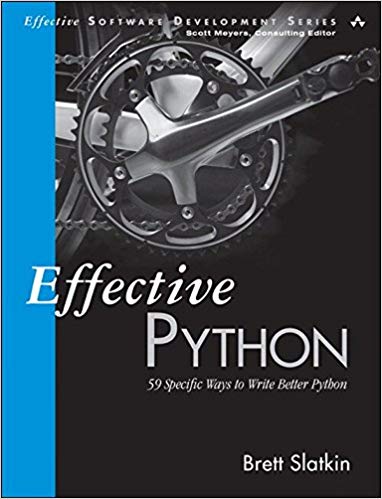 | VS. |  |
Tech Book Face Off: Python for Data Analysis Vs. Python Data Science Handbook
I'm starting to dabble in machine learning. (You know it's all the rage now.) As with anything new, I find it most effective to pick out a couple of books on the subject and start learning the landscape and the details straight away. Online resources are good for an introduction, or to find answers to specific questions on how to get a particular task done, but they don't hold a candle to the depth and focus that you can find from reading about a subject in a well-written book. Since I'd already had some general exposure to machine learning in college, I wanted to work through a couple of books that focused on how to do data analysis and machine learning in a practical sense with a real language and modern tools. Python with Pandas and Scikit-Learn has a huge community and plenty of active development right now, so that's the route I went with for this pair of books. I selected Python for Data Analysis: Data Wrangling with Pandas, NumPy, and IPython by Wes McKinney to get the details of using the Pandas data analysis package from the author of the package himself. Then I chose Python Data Science Handbook: Essential Tools for Working with Data by Jake VanderPlas to get more coverage of Pandas from another perspective and expand into some of the Scikit-Learn tools available for machine learning. Let's see how these two books stack up for learning to make sense of large amounts of data.
 | VS. | 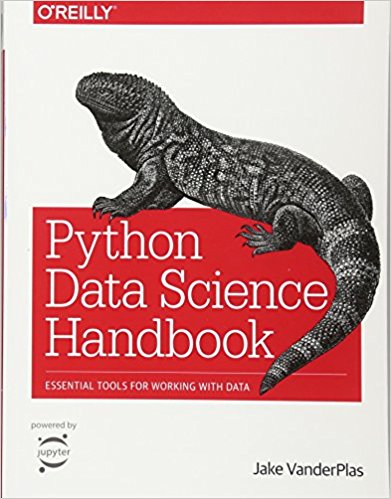 |
What I've Learned From Programming Languages
I just finished up learning about fourteen new programming languages, and while my head may still be spinning, I've been struck by one thing about learning new languages. Every single new language I learn teaches me something new and valuable about programming. Some languages reveal many new things because they happen to be the first language I've learned based on a new programming paradigm, and other languages may expose only one or two new ideas because they overlap quite a lot with languages I already know. Every language has shown me at least one new thing, though, so I thought I'd take a look back and pick out one thing learned from each language I've encountered. Some of these languages I've used extensively and others I've barely scratched the surface, so I may miss some great insights in the languages less well-known to me, but that's okay. There's still plenty to reflect on.

Building a Model for Retirement Savings in Python
It's easy to find investment advice. It's a little less easy to find good investment advice, but still pretty easy. We are awash in advice on saving for retirement, with hundreds of books and hundreds of thousands of articles written on the subject. It is studied relentlessly, and the general consensus is that it's best to start early, make regular contributions, stick it all in low-fee index funds, and ignore it. I'm not going to dispute that, but I do want to better understand why it works so well. As programmers we don't have to simply take these studies at their word. The data is readily available, and we can explore retirement savings strategies ourselves by writing models in code. Let's take a look at how to build up a model in Python to see how much we can save over the course of a career.
Disclaimer: I am not a financial adviser, so this article should not be taken as financial advice. It is merely an exploration of a model of retirement savings for the purpose of learning and understanding how savings could grow over time.
Disclaimer: I am not a financial adviser, so this article should not be taken as financial advice. It is merely an exploration of a model of retirement savings for the purpose of learning and understanding how savings could grow over time.
Subscribe to:
Posts (Atom)