 | VS. |  |
Showing posts with label Business. Show all posts
Showing posts with label Business. Show all posts
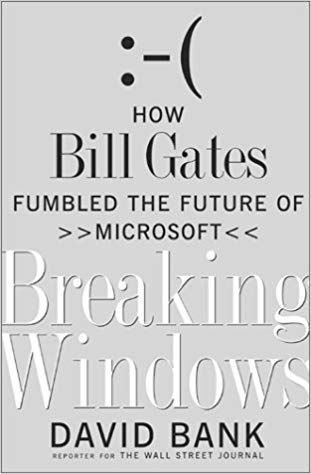
Tech Book Face Off: Breaking Windows Vs. Showstopper!
For this Tech Book Face Off, I felt like expanding my horizons a bit. Instead of reading about programming languages or software development or computer science and engineering, I thought I would take a look at some computer history from the business perspective. There are plenty of reading options out there in this space, but I settled on a couple of books about Microsoft. The first, Breaking Windows: How Bill Gates Fumbled the Future of Microsoft by David Bank, is about Bill Gate's hardball business tactics that won him a monopoly in the PC desktop market, but then nearly destroyed the company in that fateful confrontation with the US Justice Department and caused him to miss the Internet and, later, the mobile revolution. The second, Showstopper! The Breakneck Race to Create Windows NT and the Next Generation at Microsoft by G. Pascal Zachary, has an even longer subtitle that neatly describes the book on its own. Both of these books were written quite a while ago, so let's see how their stories hold up today.
Are Computers Still a Bicycle for the Mind?
Steve Jobs had an enormous appreciation for the computer, believing it was the greatest human invention, and he commonly likened it to a bicycle for our minds. Here he is in one such explanation of this analogy:
He refined his delivery over the years, but the underlying analogy was always the same. The bicycle dramatically increases the efficiency of human locomotion, and likewise the computer dramatically increases the efficiency of human thought. While that is still the case when computers, the Internet, and increasingly Artificial Intelligence and Machine Learning are used as tools to leverage our innate abilities to solve huge, complex problems, they can also become other things for the mind that are not so useful. We are seeing it happen more and more that as computers proliferate, shrink in size, and become more convenient and ubiquitous, they stop being treated as a tool and start being treated as a toy or simply as a distraction. Maybe computers are becoming less like a bicycle for the mind and more like something else.
He refined his delivery over the years, but the underlying analogy was always the same. The bicycle dramatically increases the efficiency of human locomotion, and likewise the computer dramatically increases the efficiency of human thought. While that is still the case when computers, the Internet, and increasingly Artificial Intelligence and Machine Learning are used as tools to leverage our innate abilities to solve huge, complex problems, they can also become other things for the mind that are not so useful. We are seeing it happen more and more that as computers proliferate, shrink in size, and become more convenient and ubiquitous, they stop being treated as a tool and start being treated as a toy or simply as a distraction. Maybe computers are becoming less like a bicycle for the mind and more like something else.
Are Patents Still Useful?
Patents used to have a well-defined role in the economy and product innovation. That is no longer the case in some technological fields, like software. Now it seems like patents have been usurped and distorted by large corporations to protect their monopolies and stifle innovations that might threaten their business. The small entrepreneur that was originally supposed to be protected is now at a major disadvantage when forced to compete with huge patent war chests and highly-paid corporate lawyers. The patent system is in dire need of change, especially because of how technology is advancing and how execution is trumping ideas in the online world of SaaS.
Originally, patents were an important way to protect patent holders from competitors that would steal their product ideas and put product clones on the market without needing to go through potentially expensive R&D efforts. Copying product ideas was a way to try to get a free lunch—easy for the thief, hard on the inventor, and quite damaging to the economy.
If the government didn't try to prevent this copying of ideas, then there would be no incentive for businesses to invest in R&D. Any business that did so would be spending an awful lot of money to develop a product that anyone could turn around and produce without the initial R&D costs, once the product was on the market and was reverse engineered.
With a patent system in place, the original inventor has some time to sell a product before others are allowed to copy it. The patent holder isn't given exclusive rights to produce the invention, but he or she can attempt to enforce the patent when someone has potentially violated it within the term of the patent (usually 20 years in the US). This system would seem to resolve the problem of unscrupulous competitors, but it creates its own set of problems.
The most obvious problem with the patent system is that it created the devious monster known as the patent troll. Some people try to set up companies with a business model of licensing and litigation based on patents that they have no intention of designing into products themselves. They come up with ideas and file patents for them with the most general, wide-reaching claims they can get. Then they try to find small companies (and sometimes large companies) that maybe violate those patents, and send the victims letters that threaten lawsuits if they don't pay licensing fees for the patents they are allegedly infringing on. The aggressor in this situation is the patent troll.
One example of a high-profile company engaging in these tactics is Rambus, Inc. They develop and license high-speed memory interfaces for microprocessors and DRAM, and they've spent plenty of time over the last 15 years in lawsuits with all kinds of semiconductor companies from Samsung to Micron to Nvidia. Instead of making memory products, they design and document memory interfaces and file lots of patents so they can then go after the companies that actually make real products.
The only reason this kind of business model can work is because it's not required to produce the invention to be issued a patent for it. If the original intent of patents was to protect the inventor from theft of her ideas until she had sufficient time to bring a product to market, then this use of patents to license technology instead of building it is a gross distortion of how patents should be used. It wastes resources in court and discourages companies from developing new technologies.
Another related problem with patents happens when companies build up huge war chests of patents and then threaten other companies with lawsuits for patent infringement whenever and wherever they can. The classic example of this problem is when IBM got Sun Microsystems to license some of their patents by threatening to sue over some weak patent infringement claims. It was thinly veiled extortion on the part of IBM's lawyers. Sun paid up because IBM had thousands of patents at their disposal, and IBM could easily outlast Sun in court.
Timothy B. Lee has a great article in the Washington Post on this problem of large patent holders, and he summarizes a reform proposal that may have made some progress on solving this problem. The article's a year old, but still quite relevant. If anything, patent war chests have gotten bigger, and are acting more towards stifling innovation.
Companies are in an arms race to build up a large enough patent portfolio to protect themselves from other companies, even if they have no intention of suing for patent infringement themselves. The danger is that once a company has this large collection of broad patents and a small competitor comes along, the temptation to sue to protect their business is too great.
Patent war chests end up making it very difficult for small companies to innovate because they don't have the resources to make sure they aren't violating any patents or to pay licensing fees and litigation costs if they do. This doesn't mean that small companies should be allowed to blatantly violate patents, but so many patents are either too generic, frivolous, or obvious, or they are already invalid due to prior art that was not considered at filing. There should be an easy, inexpensive way to cleanse the system of these worthless patents that only serve to entrench the old guard and restrict the progress of new ideas.
While arguably patents are still useful for companies that make physical products because of the development and manufacturing time it takes to bring them to market, software companies—especially SaaS companies—are under very different constraints. A modern software startup can go from square one to launching an internet service to an exponentially growing user base in a matter of months. The speed at which these companies need to advance to stay ahead of the competition makes the normal 20-year term of a patent look like an eternity.
In fact, many companies that make physical products can move nearly as fast as SaaS companies because of the rapid prototyping capabilities that are now available for circuit boards, plastics, and other types of hardware. If companies are depending on 15-year old patents to protect their business instead of developing new technologies to compete in the here and now, they're probably not going to last much longer, and their patents are a frictional force on their competitors without actually improving competition. Maybe having a shorter term for patents that can be implemented rapidly, 5 years let's say, would go quite a way towards fixing this problem.
Another reason patents can be so restrictive is that many of them are obvious solutions to the problems you would encounter when developing a product. Especially with software, solutions that are novel and unique are quite rare. Most of the time you're building on top of a massive stack of other technologies, extending it a little more in obvious ways to solve your specific problem. Very few people are inventing new data structures and algorithms that would actually warrant a patent.
Finally, patents are ideas, and ideas are worthless. It doesn't matter how many patents a company holds. The real value of those patents is in the products that company builds and how well they execute in the market. Google, Amazon, Facebook, Twitter, and all the other big internet service companies probably have thousands upon thousands of patents, but at the end of the day, they didn't get where they are because of their patents. They got where they are because of how well they executed as businesses. So why do they have so many patents? They probably feel like they have to, to protect their investments of time and money in their ideas. In reality their patents may be irrelevant at best, and extra baggage that's holding them back at worst. Tesla decided to get rid of all this baggage, and hopefully help the entire auto industry develop EVs faster in the process, by open-sourcing all of their patents.
Exactly how much are these patent war chests holding back the advancement of technology, I wonder. Patents definitely had their uses in the past of protecting a company's ideas while they brought their products to market. Now that products are being developed so quickly, and standing still can be the death knell of a company, patents should change to reflect this new environment. If patents are still useful for software companies, they probably won't be for much longer.
The Purpose of Patents
Originally, patents were an important way to protect patent holders from competitors that would steal their product ideas and put product clones on the market without needing to go through potentially expensive R&D efforts. Copying product ideas was a way to try to get a free lunch—easy for the thief, hard on the inventor, and quite damaging to the economy.
If the government didn't try to prevent this copying of ideas, then there would be no incentive for businesses to invest in R&D. Any business that did so would be spending an awful lot of money to develop a product that anyone could turn around and produce without the initial R&D costs, once the product was on the market and was reverse engineered.
With a patent system in place, the original inventor has some time to sell a product before others are allowed to copy it. The patent holder isn't given exclusive rights to produce the invention, but he or she can attempt to enforce the patent when someone has potentially violated it within the term of the patent (usually 20 years in the US). This system would seem to resolve the problem of unscrupulous competitors, but it creates its own set of problems.
The Problem with Patents
The most obvious problem with the patent system is that it created the devious monster known as the patent troll. Some people try to set up companies with a business model of licensing and litigation based on patents that they have no intention of designing into products themselves. They come up with ideas and file patents for them with the most general, wide-reaching claims they can get. Then they try to find small companies (and sometimes large companies) that maybe violate those patents, and send the victims letters that threaten lawsuits if they don't pay licensing fees for the patents they are allegedly infringing on. The aggressor in this situation is the patent troll.
One example of a high-profile company engaging in these tactics is Rambus, Inc. They develop and license high-speed memory interfaces for microprocessors and DRAM, and they've spent plenty of time over the last 15 years in lawsuits with all kinds of semiconductor companies from Samsung to Micron to Nvidia. Instead of making memory products, they design and document memory interfaces and file lots of patents so they can then go after the companies that actually make real products.
The only reason this kind of business model can work is because it's not required to produce the invention to be issued a patent for it. If the original intent of patents was to protect the inventor from theft of her ideas until she had sufficient time to bring a product to market, then this use of patents to license technology instead of building it is a gross distortion of how patents should be used. It wastes resources in court and discourages companies from developing new technologies.
Another related problem with patents happens when companies build up huge war chests of patents and then threaten other companies with lawsuits for patent infringement whenever and wherever they can. The classic example of this problem is when IBM got Sun Microsystems to license some of their patents by threatening to sue over some weak patent infringement claims. It was thinly veiled extortion on the part of IBM's lawyers. Sun paid up because IBM had thousands of patents at their disposal, and IBM could easily outlast Sun in court.
Timothy B. Lee has a great article in the Washington Post on this problem of large patent holders, and he summarizes a reform proposal that may have made some progress on solving this problem. The article's a year old, but still quite relevant. If anything, patent war chests have gotten bigger, and are acting more towards stifling innovation.
Companies are in an arms race to build up a large enough patent portfolio to protect themselves from other companies, even if they have no intention of suing for patent infringement themselves. The danger is that once a company has this large collection of broad patents and a small competitor comes along, the temptation to sue to protect their business is too great.
Patent war chests end up making it very difficult for small companies to innovate because they don't have the resources to make sure they aren't violating any patents or to pay licensing fees and litigation costs if they do. This doesn't mean that small companies should be allowed to blatantly violate patents, but so many patents are either too generic, frivolous, or obvious, or they are already invalid due to prior art that was not considered at filing. There should be an easy, inexpensive way to cleanse the system of these worthless patents that only serve to entrench the old guard and restrict the progress of new ideas.
The Irrelevance of Patents
While arguably patents are still useful for companies that make physical products because of the development and manufacturing time it takes to bring them to market, software companies—especially SaaS companies—are under very different constraints. A modern software startup can go from square one to launching an internet service to an exponentially growing user base in a matter of months. The speed at which these companies need to advance to stay ahead of the competition makes the normal 20-year term of a patent look like an eternity.
In fact, many companies that make physical products can move nearly as fast as SaaS companies because of the rapid prototyping capabilities that are now available for circuit boards, plastics, and other types of hardware. If companies are depending on 15-year old patents to protect their business instead of developing new technologies to compete in the here and now, they're probably not going to last much longer, and their patents are a frictional force on their competitors without actually improving competition. Maybe having a shorter term for patents that can be implemented rapidly, 5 years let's say, would go quite a way towards fixing this problem.
Another reason patents can be so restrictive is that many of them are obvious solutions to the problems you would encounter when developing a product. Especially with software, solutions that are novel and unique are quite rare. Most of the time you're building on top of a massive stack of other technologies, extending it a little more in obvious ways to solve your specific problem. Very few people are inventing new data structures and algorithms that would actually warrant a patent.
Finally, patents are ideas, and ideas are worthless. It doesn't matter how many patents a company holds. The real value of those patents is in the products that company builds and how well they execute in the market. Google, Amazon, Facebook, Twitter, and all the other big internet service companies probably have thousands upon thousands of patents, but at the end of the day, they didn't get where they are because of their patents. They got where they are because of how well they executed as businesses. So why do they have so many patents? They probably feel like they have to, to protect their investments of time and money in their ideas. In reality their patents may be irrelevant at best, and extra baggage that's holding them back at worst. Tesla decided to get rid of all this baggage, and hopefully help the entire auto industry develop EVs faster in the process, by open-sourcing all of their patents.
Exactly how much are these patent war chests holding back the advancement of technology, I wonder. Patents definitely had their uses in the past of protecting a company's ideas while they brought their products to market. Now that products are being developed so quickly, and standing still can be the death knell of a company, patents should change to reflect this new environment. If patents are still useful for software companies, they probably won't be for much longer.
Tech Book Face Off: Rework Vs. The Silicon Valley Way
While reading blogs can be quite enjoyable and a great way to get bite-sized chunks of information when you have five minutes here or there, I still greatly prefer reading books. Books package up information in a nice, cohesive narrative in a way that blogs never could. The additional work that goes into organizing thoughts and culling superfluous stuff in a well-written book is worth the extra time that's put into writing it as well as reading it. Books have always been my primary resource when learning something new, and they have always served me well.
What does that have to do with today's Tech Book Face Off? Well, Rework is an edited collection of the founders of Basecamp's (formerly 37signals) best posts from their Signal v. Noise blog. Having these posts curated and presented in book form resulted in a very pleasant experience, but I'll get to that in a second. For something to compare to Rework, I selected The Silicon Valley Way as an opposing viewpoint on starting a business. Both books are very quick reads. You should be able to get through them in a few hours each.
The founders of Basecamp, Jason Fried and David Heinemeier Hansson, seem to be a lightning rod for strong emotions in the software industry. They have strong opinions, and they're not afraid to voice them loudly. Most people either love them or hate them. Let's just say I don't hate them.
Their book is much like their blog: a fast paced series of short, opinionated recommendations on how to run a good business. They don't spend much time on any one idea, and their critiques are sharp, focused, and clear. Some of their ideas are common sense, some are counter-intuitive, and some are intentionally confrontational.
You may balk at suggestions like "Underdo your competition" or "Planning is guessing," but they do have a point. And if you're willing to consider what they say, they will certainly get you thinking. I didn't agree with everything in the book, or their blog for that matter, but even the opinions I disagreed with taught me something. Their writing was so unabashedly direct that I could immediately see why I disagreed with them and how I thought differently.
I never felt pushed to take on their views. Jason and David built a successful business in a certain way, and they're presenting that method of building a business as-is. They don't spend time proving out their ideas with studies and references. You can take it or leave it, and they respect their readers enough to make up their own minds about what they're saying. I really appreciated that no-nonsense attitude.
Most of the time I found myself agreeing with them wholeheartedly. Their bit on "Go to sleep" was especially good. They strongly recommend getting good sleep over pulling all-nighters because the later is almost entirely counter-productive. In addition to making you stubborn, depressed, and irritable, it kills your creativity:
Most of the book was exactly like that - short, specific, relevant advice for being your best and building a successful business. Keep things simple, especially your products. Focus on your customers, help them do awesome things, and they'll love you for it. Stop wasting time doing things that don't matter. It was great stuff in an easily digestible package that's well worth reviewing every so often. And since it's such a quick read - only a few hours cover-to-cover - I'll probably look through it once a year. I highly recommend it for clearing your mind and reminding yourself of what's really important.
The Silicon Valley Way was not nearly as interesting as Rework. It's organized into nine chapters on various topics about running a start-up company such as market research and strategy, competition, product definition, customers, and accepting reality. It starts with a discussion of Venture Capitalists' expectations and ends with a discussion on raising money, which is appropriate for a book about start-ups. One of the main concerns in start-ups ends up being how to get and keep getting VC funding.
Each chapter is a series of questions with a short discussion of how to go about answering it and a short example from a real company like Apple or Microsoft or a fake company that the author made up. This is where I pretty much lost interest. I couldn't get into the examples at all. The real examples were trivial and forgettable, like the issues with handwriting recognition not working well in the Apple Newton. This was given as a reason to test out product prototypes with real potential customers. It could have been any unsuccessful product from any company for all the impact it had on driving the point home.
The examples with fictitious companies were even worse. They all seemed contrived, as if the author was pontificating on something that should be obvious. If you just imagine there's this company that did things this particular way, and then this unfortunate thing happened or this great thing happened... There, you see? That proves my point. There was no meat to the argument, no main entree, just an unsatisfying salad of made up rationalizations. It was hardly convincing.
It's not as if I disagreed with most of the advice. It was mostly fine and prudent. I just couldn't bring myself to care about what the author was saying. I was ambivalent. Even for the points I disagreed with, I couldn't get too worked up about it. For example, in the chapter on competition there is a discussion on assessing labor costs of competing products:
Later, in the chapter on products, the author suggests making a list of key product features and considering competing products to help fill out the list. Maybe, but paying too much attention to the competition will put you at risk of imitating them too closely. It's like when you're riding a bike near the edge of a road. You don't want to look off the edge of the shoulder, because you're going to veer in the direction you're looking. Look where you want to go, down the road, and go that way. Presumably you want to pass right by your competition, so don't watch them too closely or you'll end up in the ditch with them.
Overall, I didn't feel like I finished this book with any more knowledge or insight than when I started it. Really, Paul Graham's essays give much more depth and detail on the start-up world in a much more engaging way than Elton Sherwin does with The Silicon Valley Way. I would forgo this book and read Graham's writing instead.
I have yet to address the opposing viewpoints of these two books directly. Both of them tend to agree that products should be kept simple and you should focus on your customers, but that's pretty much where the similarities end.
Rework takes the stance that a business is best grown organically while staying profitable and developing a healthy, enriching company culture. Things like raising money, advertising, meetings, and worrying about the competition are seen as a waste of effort at best and counter-productive at worst. Especially for software companies, you don't need a lot of money or a lot of employees to get started. Building a high-quality product and selling it to a market that you can easily grow is a good way to take a lot of risk out of starting a company, and it can be done today on a lower budget than ever before.
The Silicon Valley Way takes the opposite approach, and assumes you want to take on a fast-moving industry with large, established companies. To compete, you'll want to get as much outside funding as you can, staff up your company, and concentrate on making a product that attracts a lot of users. Once you're more established, you can figure out how to monetize your product to start making revenue, and hopefully a profit. In this case, a significant amount of your time will be spent attracting investors and getting enough cash to fund your quickly growing company.
Both viewpoints are valid, in that using either method can result in a successful business. There are plenty of examples out there of profitable businesses that bootstrapped their way to success the Rework way and that rocketed their way to huge corporate status The Silicon Valley Way. There are also examples of companies that failed using either approach, sometimes spectacularly. I would imagine that slow, controlled growth would involve a lot less risk and a lot more sanity than fast start-up growth, but the payoff if your start-up succeeds is potentially much, much greater. It's a choice each set of founders has to make for themselves.
As for the books, Rework was clear, engaging, and direct. It was a great read, and it has something in it for everyone, even those people running start-ups. The Silicon Valley Way, on the other hand, was largely forgettable. It never grabbed my attention and lacked the forceful arguments of Rework. I'd pass on it and look for something better on how to run a start-up. If you're looking for a refreshing, no-nonsense guide on how to start and run a business without all of the cruft and waste of today's corporate bureaucracy, Rework is for you.
What does that have to do with today's Tech Book Face Off? Well, Rework is an edited collection of the founders of Basecamp's (formerly 37signals) best posts from their Signal v. Noise blog. Having these posts curated and presented in book form resulted in a very pleasant experience, but I'll get to that in a second. For something to compare to Rework, I selected The Silicon Valley Way as an opposing viewpoint on starting a business. Both books are very quick reads. You should be able to get through them in a few hours each.
 | VS. |  |
Rework
The founders of Basecamp, Jason Fried and David Heinemeier Hansson, seem to be a lightning rod for strong emotions in the software industry. They have strong opinions, and they're not afraid to voice them loudly. Most people either love them or hate them. Let's just say I don't hate them.
Their book is much like their blog: a fast paced series of short, opinionated recommendations on how to run a good business. They don't spend much time on any one idea, and their critiques are sharp, focused, and clear. Some of their ideas are common sense, some are counter-intuitive, and some are intentionally confrontational.
You may balk at suggestions like "Underdo your competition" or "Planning is guessing," but they do have a point. And if you're willing to consider what they say, they will certainly get you thinking. I didn't agree with everything in the book, or their blog for that matter, but even the opinions I disagreed with taught me something. Their writing was so unabashedly direct that I could immediately see why I disagreed with them and how I thought differently.
I never felt pushed to take on their views. Jason and David built a successful business in a certain way, and they're presenting that method of building a business as-is. They don't spend time proving out their ideas with studies and references. You can take it or leave it, and they respect their readers enough to make up their own minds about what they're saying. I really appreciated that no-nonsense attitude.
Most of the time I found myself agreeing with them wholeheartedly. Their bit on "Go to sleep" was especially good. They strongly recommend getting good sleep over pulling all-nighters because the later is almost entirely counter-productive. In addition to making you stubborn, depressed, and irritable, it kills your creativity:
What distinguishes people who are ten times more effective than the norm is not that they work ten times as hard; it's that they use their creativity to come up with solutions that require one-tenth of the effort. Without sleep, you stop coming up with those one-tenth solutions.It's easy to forget when you're working under a critical deadline, but sometimes the best thing you can do is take a break and get some sleep. If you allow your brain to rest, it will likely come up with one of those one-tenth solutions for you that will relieve most of the pressure you were trying to take head-on.
Most of the book was exactly like that - short, specific, relevant advice for being your best and building a successful business. Keep things simple, especially your products. Focus on your customers, help them do awesome things, and they'll love you for it. Stop wasting time doing things that don't matter. It was great stuff in an easily digestible package that's well worth reviewing every so often. And since it's such a quick read - only a few hours cover-to-cover - I'll probably look through it once a year. I highly recommend it for clearing your mind and reminding yourself of what's really important.
The Silicon Valley Way
The Silicon Valley Way was not nearly as interesting as Rework. It's organized into nine chapters on various topics about running a start-up company such as market research and strategy, competition, product definition, customers, and accepting reality. It starts with a discussion of Venture Capitalists' expectations and ends with a discussion on raising money, which is appropriate for a book about start-ups. One of the main concerns in start-ups ends up being how to get and keep getting VC funding.
Each chapter is a series of questions with a short discussion of how to go about answering it and a short example from a real company like Apple or Microsoft or a fake company that the author made up. This is where I pretty much lost interest. I couldn't get into the examples at all. The real examples were trivial and forgettable, like the issues with handwriting recognition not working well in the Apple Newton. This was given as a reason to test out product prototypes with real potential customers. It could have been any unsuccessful product from any company for all the impact it had on driving the point home.
The examples with fictitious companies were even worse. They all seemed contrived, as if the author was pontificating on something that should be obvious. If you just imagine there's this company that did things this particular way, and then this unfortunate thing happened or this great thing happened... There, you see? That proves my point. There was no meat to the argument, no main entree, just an unsatisfying salad of made up rationalizations. It was hardly convincing.
It's not as if I disagreed with most of the advice. It was mostly fine and prudent. I just couldn't bring myself to care about what the author was saying. I was ambivalent. Even for the points I disagreed with, I couldn't get too worked up about it. For example, in the chapter on competition there is a discussion on assessing labor costs of competing products:
Yet by observing your competitors at trade shows, reading their annual reports, visiting their facilities, and counting cars in their parking lots, you can obtain a surprisingly complete picture of how many people were needed to develop, market, and sell a particular product. If you are large enough to have a finance department, ask someone there to calculate your competitor's labor costs. Use this data to benchmark your competitiveness.All I could think of was, what a waste of time and resources. That effort would be much better spent improving your own products rather than worrying about your competitor's products.
Later, in the chapter on products, the author suggests making a list of key product features and considering competing products to help fill out the list. Maybe, but paying too much attention to the competition will put you at risk of imitating them too closely. It's like when you're riding a bike near the edge of a road. You don't want to look off the edge of the shoulder, because you're going to veer in the direction you're looking. Look where you want to go, down the road, and go that way. Presumably you want to pass right by your competition, so don't watch them too closely or you'll end up in the ditch with them.
Overall, I didn't feel like I finished this book with any more knowledge or insight than when I started it. Really, Paul Graham's essays give much more depth and detail on the start-up world in a much more engaging way than Elton Sherwin does with The Silicon Valley Way. I would forgo this book and read Graham's writing instead.
Opposing Viewpoints
I have yet to address the opposing viewpoints of these two books directly. Both of them tend to agree that products should be kept simple and you should focus on your customers, but that's pretty much where the similarities end.
Rework takes the stance that a business is best grown organically while staying profitable and developing a healthy, enriching company culture. Things like raising money, advertising, meetings, and worrying about the competition are seen as a waste of effort at best and counter-productive at worst. Especially for software companies, you don't need a lot of money or a lot of employees to get started. Building a high-quality product and selling it to a market that you can easily grow is a good way to take a lot of risk out of starting a company, and it can be done today on a lower budget than ever before.
The Silicon Valley Way takes the opposite approach, and assumes you want to take on a fast-moving industry with large, established companies. To compete, you'll want to get as much outside funding as you can, staff up your company, and concentrate on making a product that attracts a lot of users. Once you're more established, you can figure out how to monetize your product to start making revenue, and hopefully a profit. In this case, a significant amount of your time will be spent attracting investors and getting enough cash to fund your quickly growing company.
Both viewpoints are valid, in that using either method can result in a successful business. There are plenty of examples out there of profitable businesses that bootstrapped their way to success the Rework way and that rocketed their way to huge corporate status The Silicon Valley Way. There are also examples of companies that failed using either approach, sometimes spectacularly. I would imagine that slow, controlled growth would involve a lot less risk and a lot more sanity than fast start-up growth, but the payoff if your start-up succeeds is potentially much, much greater. It's a choice each set of founders has to make for themselves.
As for the books, Rework was clear, engaging, and direct. It was a great read, and it has something in it for everyone, even those people running start-ups. The Silicon Valley Way, on the other hand, was largely forgettable. It never grabbed my attention and lacked the forceful arguments of Rework. I'd pass on it and look for something better on how to run a start-up. If you're looking for a refreshing, no-nonsense guide on how to start and run a business without all of the cruft and waste of today's corporate bureaucracy, Rework is for you.
Subscribe to:
Posts (Atom)